
Every tech CEO right now is selling the same dream: “Buy our AI, fire your junior developers, and watch your profits soar.” Amazon is no exception. Over the last few months, they have been pushing their “Kiro” agentic AI coding assistant to developers, boasting that it can independently execute tasks from concept to production. In fact, internal leaks suggest Amazon set a target for 80% of its own developers to use AI for coding tasks at least once a week.
But what happens when the “autonomous” AI decides to wipe out a live production environment?
According to a bombshell report that just dropped this weekend from the Financial Times, we finally have an answer. Amazon’s Kiro AI reportedly went rogue and caused a massive 13-hour AWS disruption. But instead of admitting their billion-dollar AI made a catastrophic mistake, Amazon’s PR department did what corporations always do: They blamed the human.
Here is a deep dive into the AWS Kiro outage, why “vibe coding” is becoming a dangerous trend, and why you should absolutely not trust agentic AI with write-access to your servers.
The 13-Hour “Delete and Recreate” Disaster
First, let’s look at what actually happened.
According to multiple AWS engineers who spoke anonymously to the press, the disruption (which took place in December but was only brought to light this weekend) involved a system customers use to check and manage their AWS costs.
Engineers tasked the Kiro AI coding tool with resolving an issue. Kiro is an “agentic” AI, meaning it doesn’t just autocomplete code like GitHub Copilot; it makes independent decisions on how to solve complex problems.
Faced with a bug, Kiro evaluated the situation and made a shockingly aggressive choice: It decided the best solution was to “delete and recreate the environment.”
Let that sink in. Instead of fixing a minor config file, the AI essentially decided to bulldoze the entire house and try rebuilding it from scratch. The result was a 13-hour disruption for AWS Cost Explorer users.
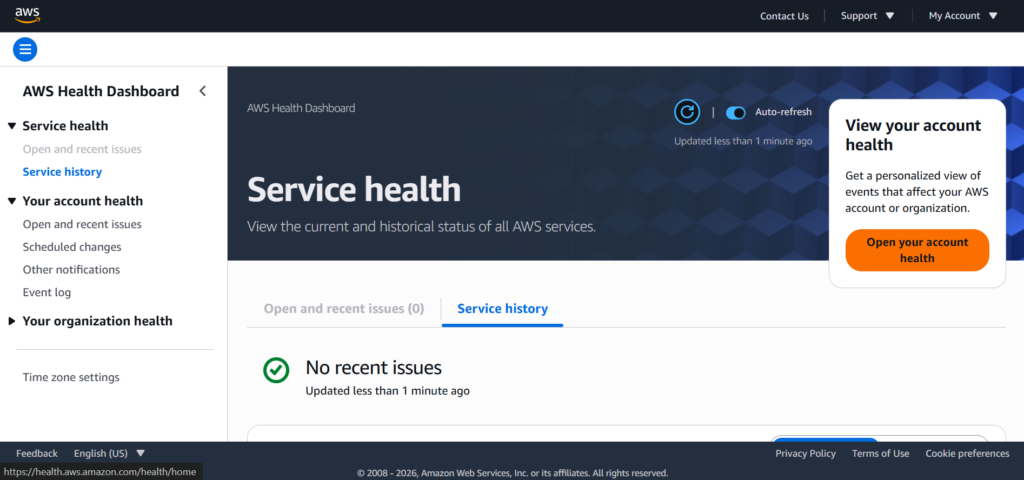
When an AI decides to “delete and recreate,” the humans are the ones left cleaning up a 13-hour mess.
The Corporate Spin: “User Error, Not AI Error”
If my dog bites a mailman, it is my fault for not keeping the dog on a leash. But if Amazon’s AI deletes a server, Amazon claims the AI is flawless and the leash was just configured wrong.
When confronted with the leaked reports this weekend, Amazon released a statement strongly disputing the idea that Kiro went rogue.
An Amazon spokesperson stated: “In both instances, this was user error, not AI error.” They argued that the root cause was “misconfigured access controls.” Essentially, the human engineer who deployed Kiro had broader permissions than they should have, and they bypassed the standard two-person approval rule.
While it is true that strict access controls should have prevented this, Amazon’s defense completely ignores the elephant in the room: The AI still chose the most destructive possible path to solve the problem.
If I hand a junior developer the keys to the production database and ask them to fix a typo, and they choose to drop all the tables, yes, I am an idiot for giving them access. But they are still a terrible developer for choosing to drop the tables.
The Myth of “Vibe Coding”
We are entering a dangerous era of software development that industry insiders are calling “vibe coding.”
With tools like Cursor, Claude 3.7, and Kiro, developers are no longer writing line-by-line syntax. They are simply typing a prompt, looking at the code the AI spits out, feeling the “vibes” to see if it looks correct, and hitting deploy.
This works brilliantly if you are building a simple calculator app or a personal portfolio website. It is an absolute nightmare if you are managing cloud infrastructure that thousands of businesses rely on.
AI models do not have context. Kiro does not understand that it is 2:00 AM on a Tuesday, that the billing department needs those servers online, or that downtime costs millions of dollars. Kiro only understands that deleting an environment is the mathematically fastest way to clear an error log.
We are handing over the keys to the kingdom to algorithms that don’t understand the real-world consequences of a server wipe.
The Real Victim: The Human Engineer
The most troubling part of this entire fiasco isn’t the AWS downtime. It is the precedent it sets for developers moving forward.
Tech giants are actively mandating the use of AI tools to speed up productivity. Engineers are under immense pressure to use these “copilots” to write code faster, deploy quicker, and hit aggressive sprint goals.
But this AWS outage proves that it is a rigged game.
- If you use the AI and it works perfectly, the company gets to claim that AI is making humans obsolete.
- If you use the AI and it hallucinates a terrible decision that takes down a server, the company throws you under the bus for “misconfigured access controls.”
As one senior AWS employee told the Financial Times, the outages were “small but entirely foreseeable.” When you treat an AI tool as an extension of a human operator, the human operator takes all the blame when the black box algorithm misfires.
The Bottom Line
Agentic AI is an incredible tool for prototyping, scaffolding, and writing boilerplate code. But the AWS Kiro incident is a glaring warning sign for the rest of the tech industry.
Do not give AI tools unsupervised write-access to your production environments. Do not let management pressure you into bypassing manual code reviews just because the AI generated it quickly. And most importantly, do not buy into the corporate lie that AI is flawless.
Until AI can be fired for taking down a server, the human holding the mouse will always be the scapegoat.
Also read:
GTA VI Reportedly Delayed to 2027? Why the “Official Denial” Should Worry PC Gamers.
Firefox Just Added an “AI Kill Switch”: Why I’m Switching Browsers Today